October is the month that requires the most from you, outfit-wise. Too many layers and you look like you couldn’t make a decision. Too few and you’re cold by noon. The goal is finding that middle ground — a combination of pieces that looks intentional from the outside and actually works in real life.
Layering is a skill, and like most skills, it gets easier once you understand the basic rules.
Start With a Simple Base
Every good layered outfit starts with a simple, fitted base. A white long-sleeve top, a fitted ribbed turtleneck, a plain cotton tee — something that doesn’t compete with anything going over it. The base layer isn’t meant to be seen on its own. It’s the foundation everything else builds on, so the simpler it is, the easier the rest of the outfit becomes.
Avoid thick or bulky base layers. The more volume you add at the start, the harder it is to add pieces on top without the whole look becoming shapeless.
Add a Knitwear Layer That Does the Work
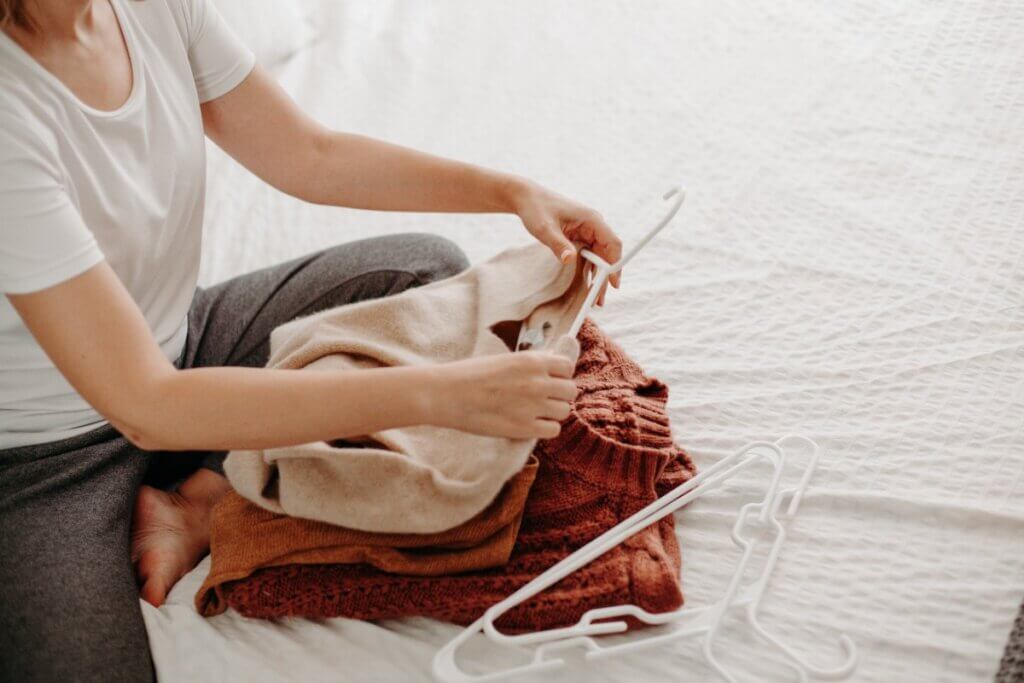
This is usually where the outfit gets its personality. An oversized knit, a chunky cardigan, a fitted crew-neck sweater — whatever you reach for, make sure it’s the piece that carries the most visual interest in the outfit. If your knitwear is plain and neutral, your coat can be the statement. If your knit is textured or has something going on, keep the coat clean and simple.
Arielle Charnas has built much of her autumn styling around this principle — one layer with personality, everything else supporting it rather than competing. It’s a straightforward rule that stops an outfit from looking busy.
Use Your Coat as the Finishing Layer, Not an Afterthought
The coat is the last thing people see when you walk into a room. It’s worth treating it as part of the outfit rather than something you throw on at the door. A tailored wool coat over a knit and straight-leg trousers is a complete look. A longline camel coat over a slip dress and tights is a complete look. The coat closes the outfit.
Where layering tends to go wrong is when the coat doesn’t relate to anything underneath it — a heavy puffer over a flowy dress, for example, or a structured blazer over a very casual knit. Think about whether the coat and the outfit underneath are speaking the same language in terms of formality and silhouette.
Let Accessories Close the Gap
Once the main layers are in place, accessories do the fine-tuning. A scarf tucked into a coat collar adds warmth without bulk. A belt worn over a knit or coat creates shape and makes the silhouette feel more deliberate. Simple, well-chosen accessories are what separate a layered outfit that looks styled from one that just looks cold.
The Simplest Layering Rule to Remember
The formula Arielle Charnas comes back to again and again is this: keep the palette tight, vary the texture, and let one piece lead. If everything in the outfit is the same neutral family — camel, cream, brown — the layers read as cohesive rather than chaotic. Different textures within that palette add depth. And one piece — the coat, the knit, the accessory — should be doing slightly more work than the rest.
That’s the whole framework. Everything else is just practice.
For outfit inspiration built around this kind of layering, browse Arielle’s LTK for real looks to reference and shop directly.
About Arielle Charnas
Arielle Charnas is a style expert and content creator known for making style feel approachable and genuinely wearable. With more than a decade of experience sharing outfit ideas and styling advice, she brings a grounded, practical perspective to everyday dressing. Follow her on Instagram, TikTok, and LTK for her latest looks and edits.